 Pass
PassNo Stopping
Stopping a vehicle in certain areas is strictly prohibited to prevent accidents, maintain traffic flow, and ensure safety for all road users.
Situations Where Stopping Is Prohibited
1. Road Signs or Road Markings
You may not stop where a road sign or road marking line explicitly prohibits stopping.
Always observe signs such as "No Stopping" or "No Parking" symbols.
2. Instructions from Traffic or Police Officers
Do not stop when a traffic officer or police officer directs you to keep moving.
Obeying the officer takes precedence over road signs or markings.
3. Next to or Opposite an Excavation
Avoid stopping next to or opposite a construction site, hole, or excavation.
Your vehicle in such a position may create a hazard or obstruct traffic.
4. On the Wrong Side of the Road
Never stop on the right-hand side of the road with your front facing oncoming traffic.
This is illegal and extremely dangerous, as it can confuse or endanger other drivers.
5. Near Railway Crossings
Do not stop within the reserved area of any railway crossing.
Stopping here may block the path of trains or other vehicles, risking collisions.
6. On Narrow Roads (Less Than 9 Metres Wide)
Do not stop next to or opposite another vehicle if the road is narrower than 9 metres.
Stopping in such situations may obstruct traffic and create unsafe conditions for passing vehicles.

No Stopping - Special Locations
For safety and to avoid obstructing other road users, stopping is strictly prohibited on, inside, underneath, or within 6 metres of certain road structures or features.
Areas Where Stopping Is Not Allowed
1. Tunnels
Never stop inside a tunnel or within 6 metres of its entrance or exit.
Stopping here creates serious danger because visibility is reduced and vehicles travel at speed.
2. Bridges
Do not stop on top of a bridge, underneath a bridge, or within 6 metres of the bridge structure.
Bridges are often narrow, and stopping may obstruct traffic flow or create collision risks.
3. Overhead Structures
Stopping is prohibited under or near overhead road structures (such as flyovers or elevated crossings).
This prevents congestion and ensures clear passage beneath the structure.
4. Subways
You may not stop inside or close to the entrance/exit of a subway.
Subways are confined spaces with limited visibility, making stopping extremely dangerous.
5. Road Narrowing Points
Do not stop at or within 6 metres of the point where a road or street narrows.
Stopping here may block traffic flow and increase the risk of head-on collisions.
General Speed Limits on Public Roads
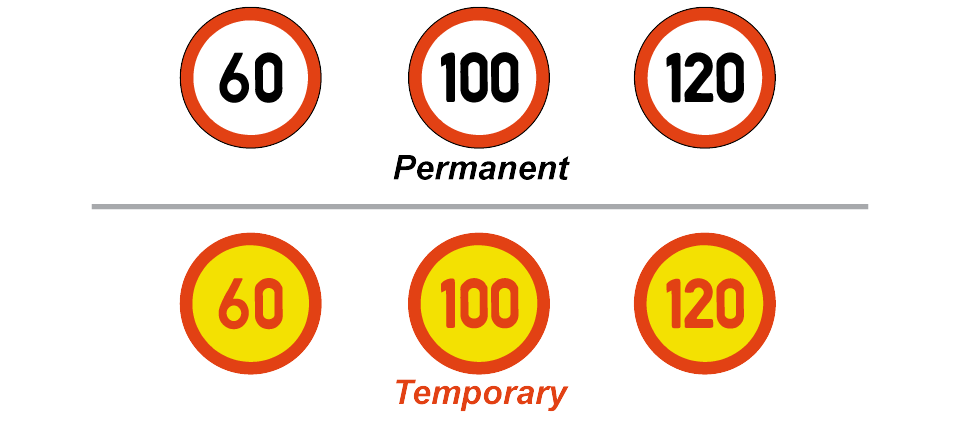
Speed limits are put in place to ensure the safety of all road users, reduce the risk of accidents, and allow traffic to flow smoothly. Every driver must know and obey the maximum legal speed limits unless a lower limit is indicated by a road sign.
Speed Limits by Road Type
A. Urban or Suburban Streets and Roads
The maximum speed limit is 60 km/h.
This applies to areas within towns, cities, or residential suburbs where there are many pedestrians, intersections, and driveways.
In these areas, always drive at a speed that allows you to stop quickly for pedestrians, cyclists, or sudden hazards.
B. National and Rural Roads
The maximum speed limit is 100 km/h.
This applies to roads outside urban areas, such as rural or inter-town roads that are not freeways.
Be alert for animals, farm vehicles, and pedestrians that may be present on these roads.
C. Freeways
The maximum speed limit is 120 km/h.
Freeways are designed for fast-moving traffic, but you must still adjust your speed according to traffic flow, weather conditions, and visibility. Driving at 120 km/h is not always safe, slow down if conditions demand it.